ServicesCeramic Window Film
Ceramic Window Film in Seabrook
Ceramic film keeps the sun's heat out of a room without turning your windows dark or mirrored. We measure, install it clean, then check back once it cures and show you how to look after it. Your rooms get cooler. Your view stays clear.
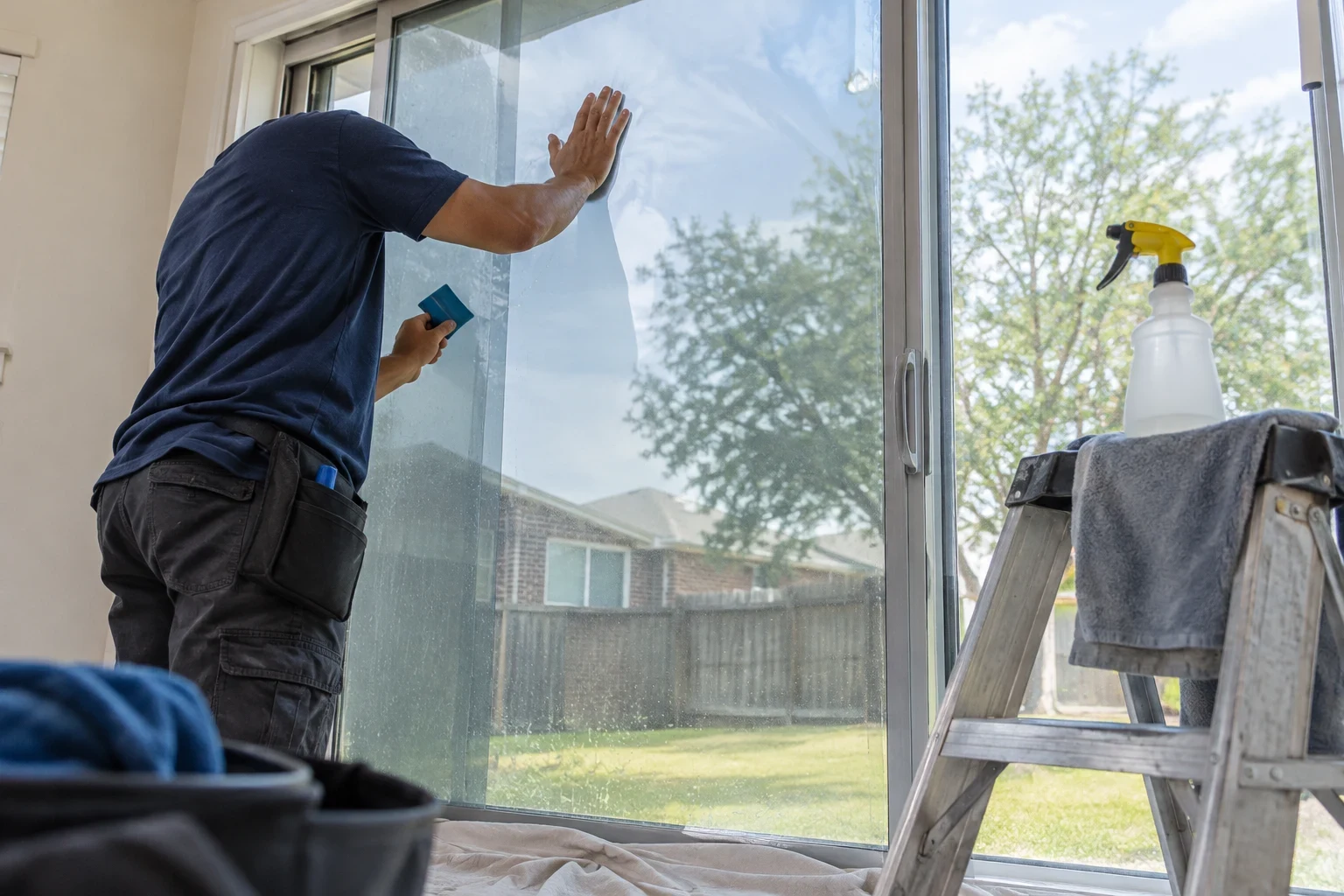
What Ceramic Film Does and When It Fits
Ceramic window film uses tiny ceramic particles to block infrared light, the part of sunlight you feel as heat. It also blocks nearly all UV, which fades floors, rugs and furniture. Because there is no metal in it, the film looks close to clear from inside and out, and it will not interfere with cell service, Wi-Fi or GPS.
It is the right call when a room bakes in the late-day sun but you do not want it to feel dim. Think west-facing living rooms, sunrooms, a home office with a big window behind the desk. It also suits anyone who has tried a cheap dyed tint before and watched it turn purple and bubble.
Near the bay, salt air can work on metal-based films at the edges over time. Ceramic film has no metal to corrode, so it holds up better in a coastal home.
What You Get With a Ceramic Film Job
- A look at your glass first
- We check whether each window is single pane, dual pane or low-E coated. Some glass takes heat differently, and we match the film to it so you do not risk stress cracks.
- Film shade options you can see
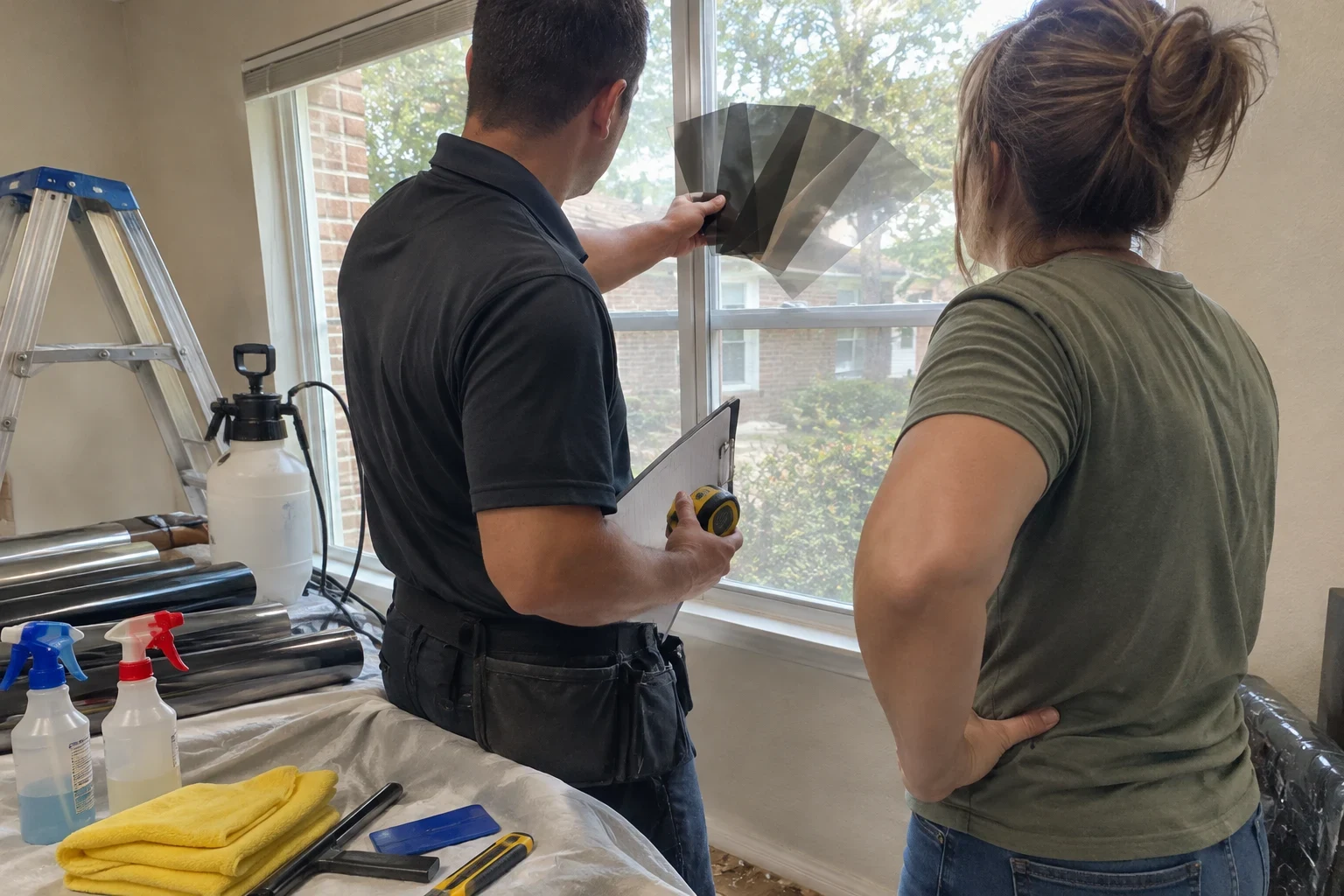
- We bring samples and hold them up to your actual windows. You pick how light or dark you want it with the real view in front of you.
- Careful prep and install
- We cover sills and floors, clean every pane, and trim the film to a tight edge gap. Furniture near the windows gets moved and put back.
- Care instructions in plain words
- Before we leave, we walk you through what to expect while the film cures and how to clean it later on. No guessing about what is normal.
- A check-back once it cures
- Once the film has had time to dry out, we follow up to see how it looks and answer anything that came up. If an edge lifted or a spot needs attention, we come back and handle it.
Signs Ceramic Film Is Worth a Look
One room is always hotter
The AC runs but a sunny room never catches up. That is infrared heat coming straight through the glass.
Your floors and fabrics are fading
Wood floors lighten in a strip by the window. Couch cushions lose color on one side. UV is doing that, and ceramic film blocks most of it.
You hate the mirror look
Some neighborhoods or HOAs frown on shiny glass, and some people just do not like it. Ceramic film gives heat rejection without the reflective finish.
Old tint is bubbling or purple
Dyed films break down in strong sun. If yours has, we can strip it and put up ceramic film that keeps its color.
Glare on screens
A TV or monitor gets washed out at certain hours. Ceramic film cuts glare without making the room feel like a cave.
What Moves the Price
Ceramic film costs more per foot than dyed or basic films because the material itself costs more to make. Your total depends mostly on how much glass you have and how easy it is to reach. We give you a written number once we see the windows, so you know the cost before any work starts.
Square footage
More glass means more film and more labor. A few problem windows cost far less than a whole house.
Window height and access
Tall picture windows, transoms and stairwell glass need ladders or extra setup. Easy ground-level panes go faster.
Old film removal
Stripping failed tint and its glue is slow, careful work. If your windows are bare, you skip this cost.
Film grade and shade
Ceramic films come in several grades. Higher heat rejection lines cost more, and we will tell you honestly if a lower grade does the job for your room.
How the Day Goes
- 1
Consultation and quote
We look at your windows, talk about which rooms bother you most, and show film samples. You get a written quote before any work is scheduled.
- 2
Prep the room
We lay down drop cloths, move what is in the way and clean the glass until it is spotless. Dust under film shows, so this step takes time.
- 3
Install and squeegee
Each piece is cut to the pane, set with a slip solution and pressed out from the center. Most homes are done in a single visit.
- 4
Walkthrough and cleanup
We clean up, put furniture back and go over each window with you. You get care instructions before we head out.
- 5
Follow-up
Once the curing period is over, we check in to make sure everything dried clear and the edges are tight.
Ceramic Film Questions
Will ceramic film make my rooms dark?
Not unless you want it to. Ceramic film comes in light shades that look almost clear and still block a lot of heat. We show you samples on your own glass so you can decide.
Why does it look hazy or have small water spots right when it goes up?
That is leftover moisture from the slip solution. It dries out on its own over the first few weeks, faster in warm weather. Do not press on the spots or try to push them out. We check back at the end of this period to make sure it cleared.
How do I clean it?
Wait until it has cured, then use a soft cloth or rubber squeegee with mild soapy water or an ammonia-free cleaner. Skip paper towels, scrubbers and razor blades, which can scratch the surface. We go over this with you on install day.
Is it safe on dual-pane windows?
Usually yes, but it depends on the glass and the film. That is why we check every window before we recommend a product. If a pane is a poor fit, we will say so.
Does it affect my phone or internet signal?
No. Ceramic film has no metal in it, so signals pass through like the film is not there. Metallic and some reflective films can cause problems, which is one reason people choose ceramic.
How is it different from reflective film?
Reflective window film bounces heat off a shiny surface and gives you daytime privacy. Ceramic film absorbs and blocks heat while staying clear and low-shine. If privacy matters more than the view, our privacy window tinting page covers other options.
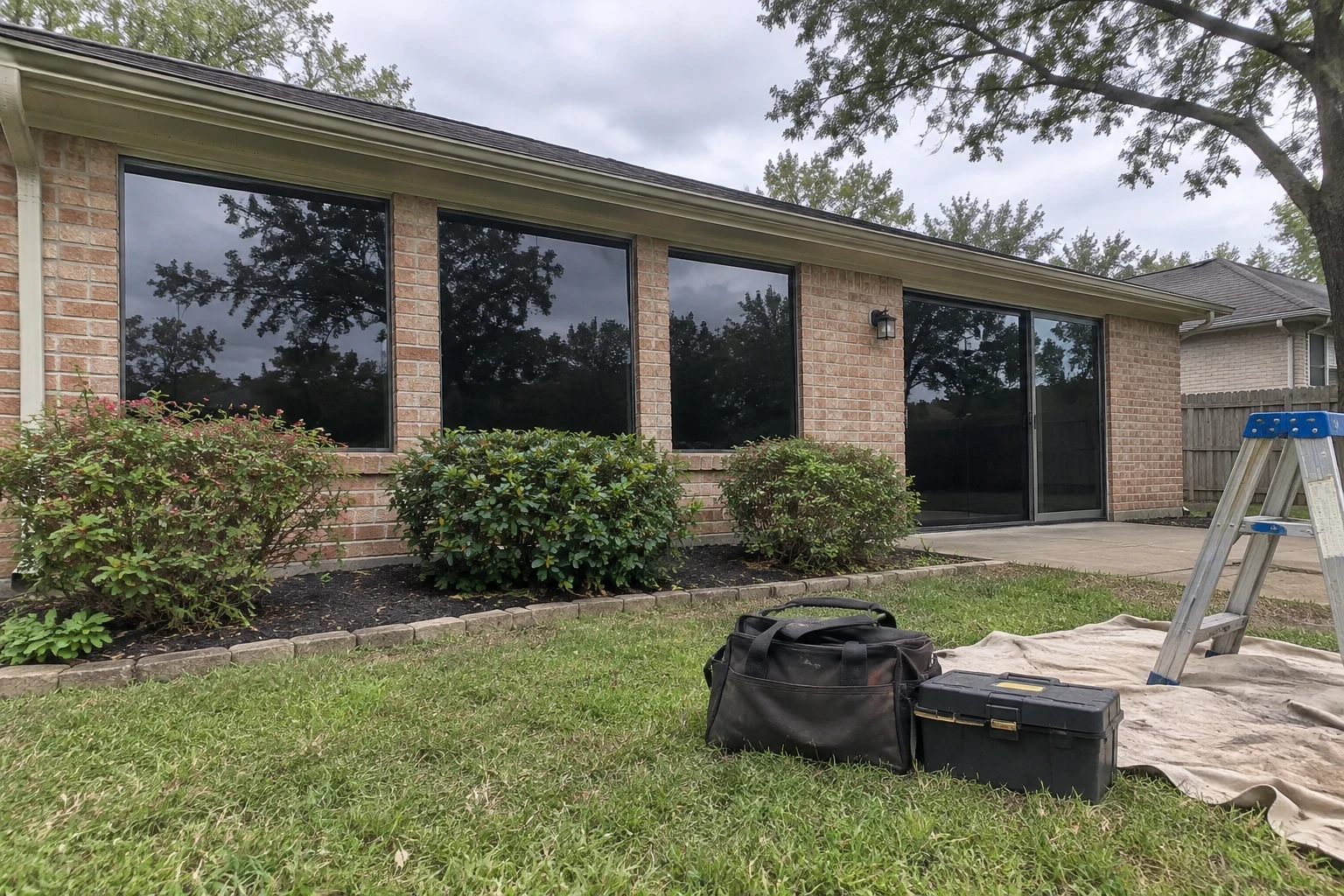
Get a Cooler Room Without a Darker One
Tell us which rooms run hot and we will come look at the glass. You get a straight answer on whether ceramic film is the right fit, and we check back once the job is done.