ServicesOffice Window Tinting
Office Window Tinting in Seabrook
We put window film on office glass so your people can see their screens, the desks by the windows stop baking, and passersby can't read your whiteboard. After the job, we come back to check the film and show your staff how to care for it.
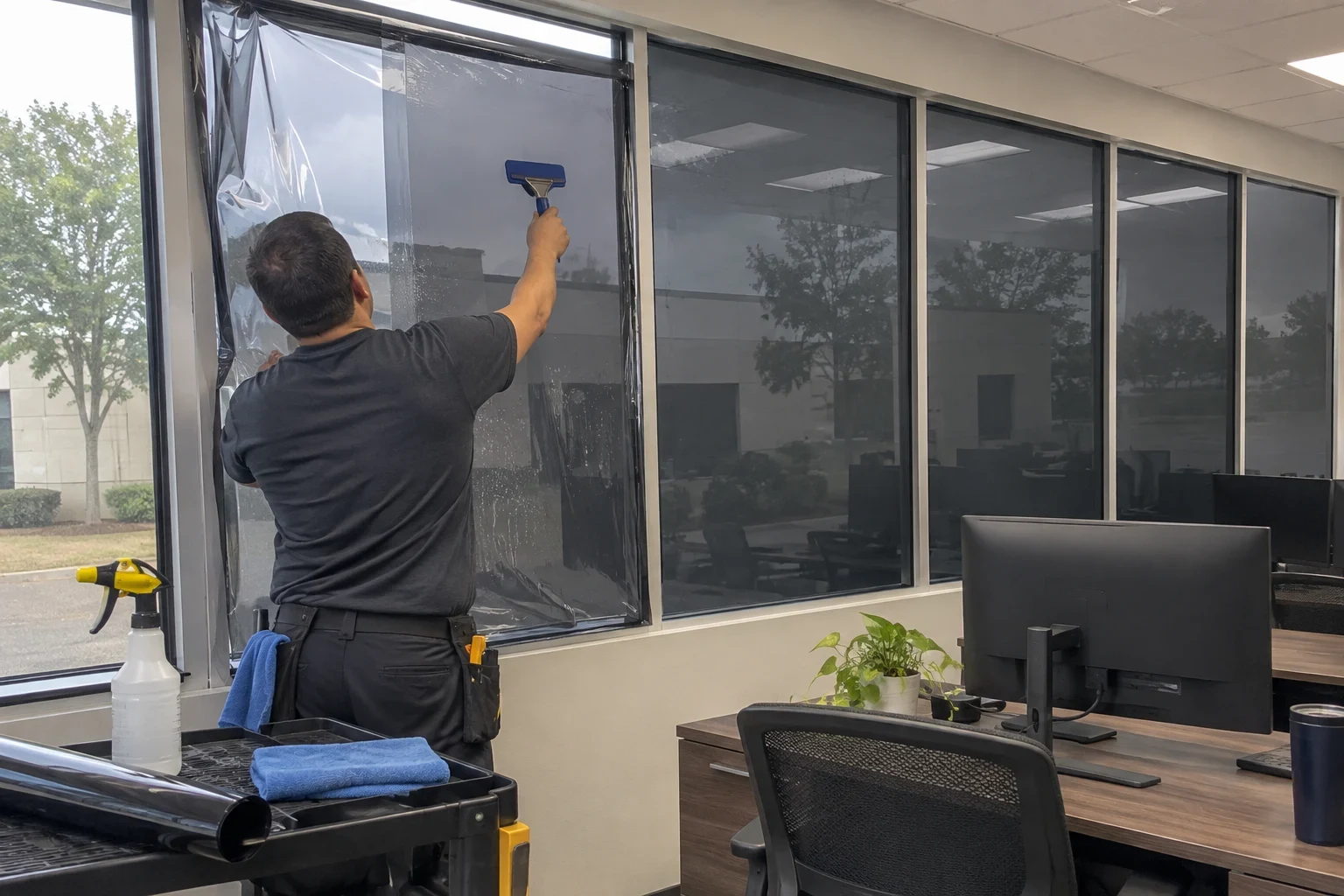
What office window film does for a workday
Most office complaints about windows come down to two things. The sun hits a monitor and nobody can read it, or one side of the room runs hot while the other side reaches for a sweater. Blinds fix that by shutting out the daylight. Film fixes it and keeps the view.
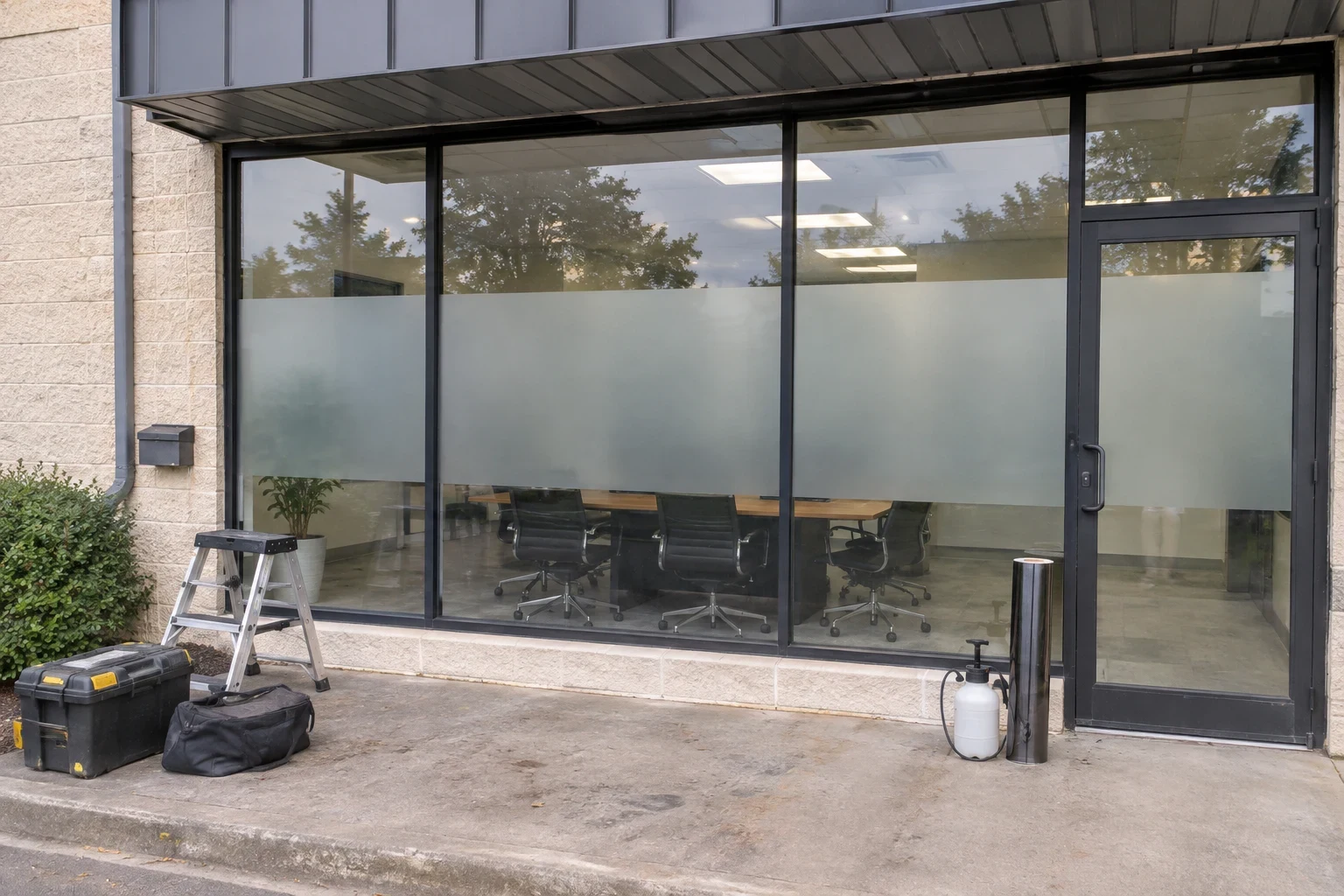
We fit the film to how the room is used. A reception area might want a clear look with strong heat rejection. A conference room on the street side might want privacy during the day. An open floor with rows of screens usually needs glare reduction first. We look at which way each wall faces and pick the film from there.
The job doesn't end when we pack up. We check back once the film has had time to cure, look for anything that didn't settle right, and walk your office manager through cleaning so the film lasts.
What the job includes
- A walk-through of every window
- We go room by room, note which glass gets morning or afternoon sun, and ask where people sit. That tells us where glare and heat actually hurt the work.
- Film choices you can see
- We bring samples and hold them up to your glass. You see how dark each one looks from inside and outside before you decide.
- A written quote by window
- You get a quote that lists each area and the film going on it. No lump sum you have to guess at.
- Clean, careful install
- We cover desks and floors near the glass, clean each pane, trim the film to the edge, and squeegee out the water. Cords, chairs and plants get moved back where they were.
- A check-back visit
- A few weeks later we return to look over the film once it has cured. Any edge lift or bubble that didn't clear gets handled then.
- Care instructions for your staff
- We leave plain instructions on cleaning and what to avoid, so the person who wipes the windows knows what to use.
Signs your office could use window film
People tilt their screens
If staff angle monitors away from the window or work with the blinds shut all day, glare is costing you light and focus.
Hot desks and cold desks
One row runs warm by early afternoon while the thermostat fights to keep the rest of the floor cool. Heat rejection film evens that out.
The blinds never open
Blinds that stay down year round mean you're paying for windows you can't use. Film lets you raise them again.
Faded furniture and carpet
Chairs, rugs and artwork near the glass lose color from UV exposure. Film blocks most of it.
Too much is visible from outside
If people in the parking lot can see screens, files or a meeting in progress, a privacy film may be the right fit. Our Privacy Window Tinting page covers those options in more detail.
What moves the price
Office jobs are priced on the glass and the film, not a flat rate. Two offices the same size can come in very differently. Your quote breaks it down window by window so you can see where the cost comes from.
Square footage of glass
More glass means more film and more labor. Large storefront panes and long window walls add up fast.
Film type
Basic glare film costs less than ceramic film with high heat rejection. Security film is thicker and priced higher still.
Access
Ground-floor glass a person can reach from the floor is quicker than high windows that need ladders or a lift, or panes behind fixed furniture.
Old film removal
If the glass already has worn or peeling film, it has to be stripped and the adhesive cleaned off before new film goes on.
Pane size and shape
Lots of small divided panes take more cutting and trimming than a few big ones.
How an office job runs
- 1
The phone call
You tell us about the space, how many windows, and what's bothering people. We set a time to come look.
- 2
The site visit and quote
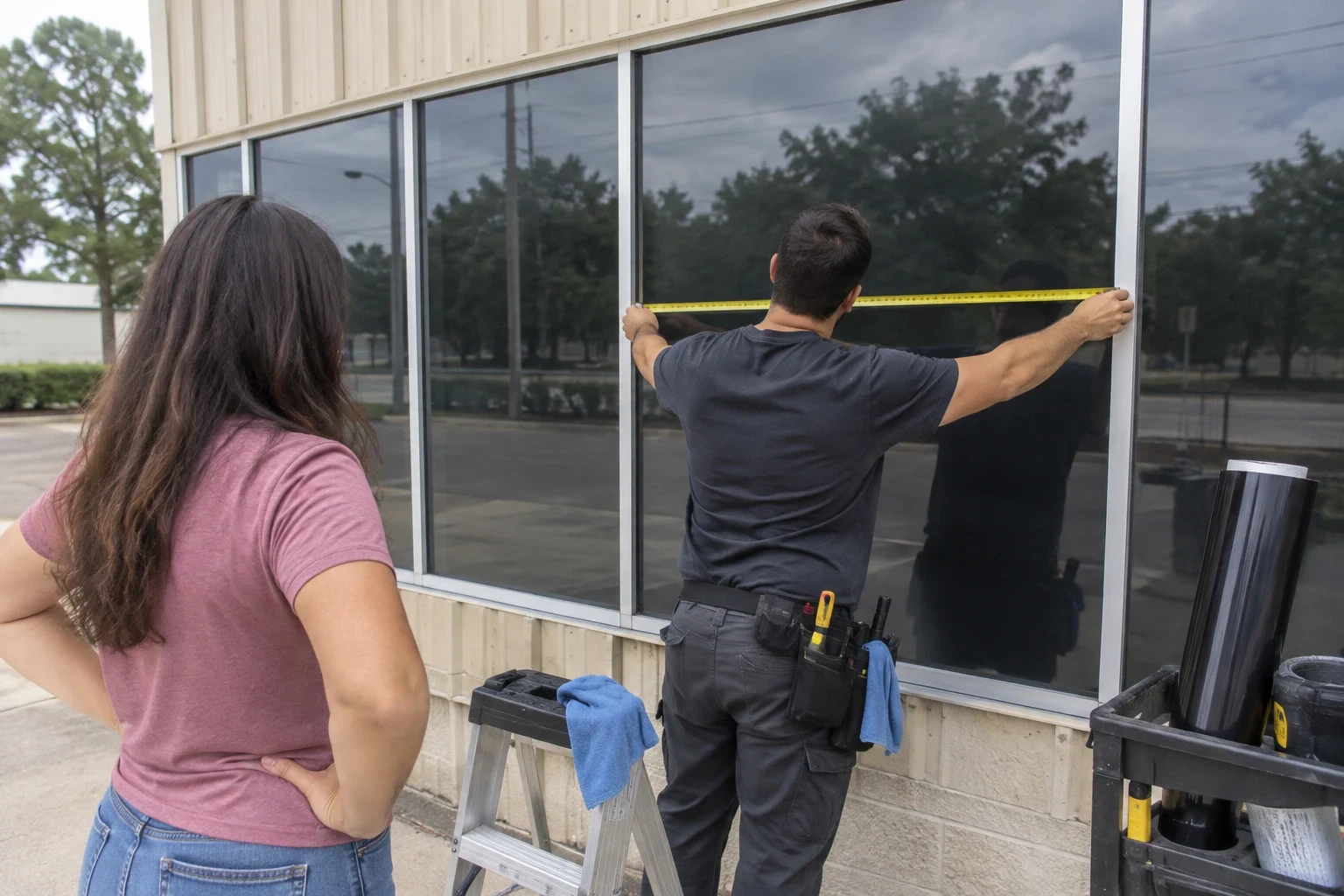
We measure, check each pane's condition, show samples, and give you a written quote. If a window has a failed seal or cracked glass, we tell you before any film goes on.
- 3
Install day
We work one area at a time so most of the office can keep running. Glass gets cleaned, film goes on, edges get trimmed, and we clean up as we go. We can talk through timing that suits your hours.
- 4
Curing
For the first few weeks the film may look a little hazy or show small water pockets. That's moisture drying out, and it clears on its own. Humid Gulf Coast weather can stretch it out a bit.
- 5
The follow-up
We come back to check every window once it has cured, fix anything that needs it, and go over care with your staff.
Office window tinting questions
Will the office be shut down during the install?
Usually not. We work one section at a time, so people can keep working in the rest of the space. Anyone sitting right at the window will need to move for a while. We'll talk through timing with you before install day.
Will the film make the office feel dark?
It doesn't have to. Many films cut glare and heat while still letting in plenty of daylight. We show samples on your own glass so you can judge it before anything goes up.
Can we still see out?
Yes. Most office films keep a clear view from inside during the day. At night, with lights on inside, darker or reflective films can make the glass act like a mirror from your side, so we'll point that out if it applies.
How should our cleaning crew handle the windows?
Hold off cleaning the filmed side until the film has cured. After that, use a soft cloth or rubber squeegee with mild soapy water. Skip ammonia cleaners, razor blades and scrub pads. We go over this on the follow-up visit.
Why do the windows look hazy after the install?
That's water left under the film from installation. It dries out over the first few weeks and the haze goes away. If anything is still there when we come back to check, we take care of it.
Can different rooms get different films?
Yes, and that's common. A conference room might get privacy film while the open floor gets a clear glare film. We'll suggest what fits each area on the walk-through.
Get your office glass looked at
We'll come out, check each window, and show you film samples on your own glass. You get a written quote, and after the install we come back to check the work.