ServicesTurf Protection Film
Turf Protection Window Film in Seabrook
Some energy-efficient windows bounce focused sunlight onto artificial turf, vinyl siding and patio furniture until it melts. We put film on the glass that breaks up that beam. A few weeks later we come back to check the film and the turf below it.
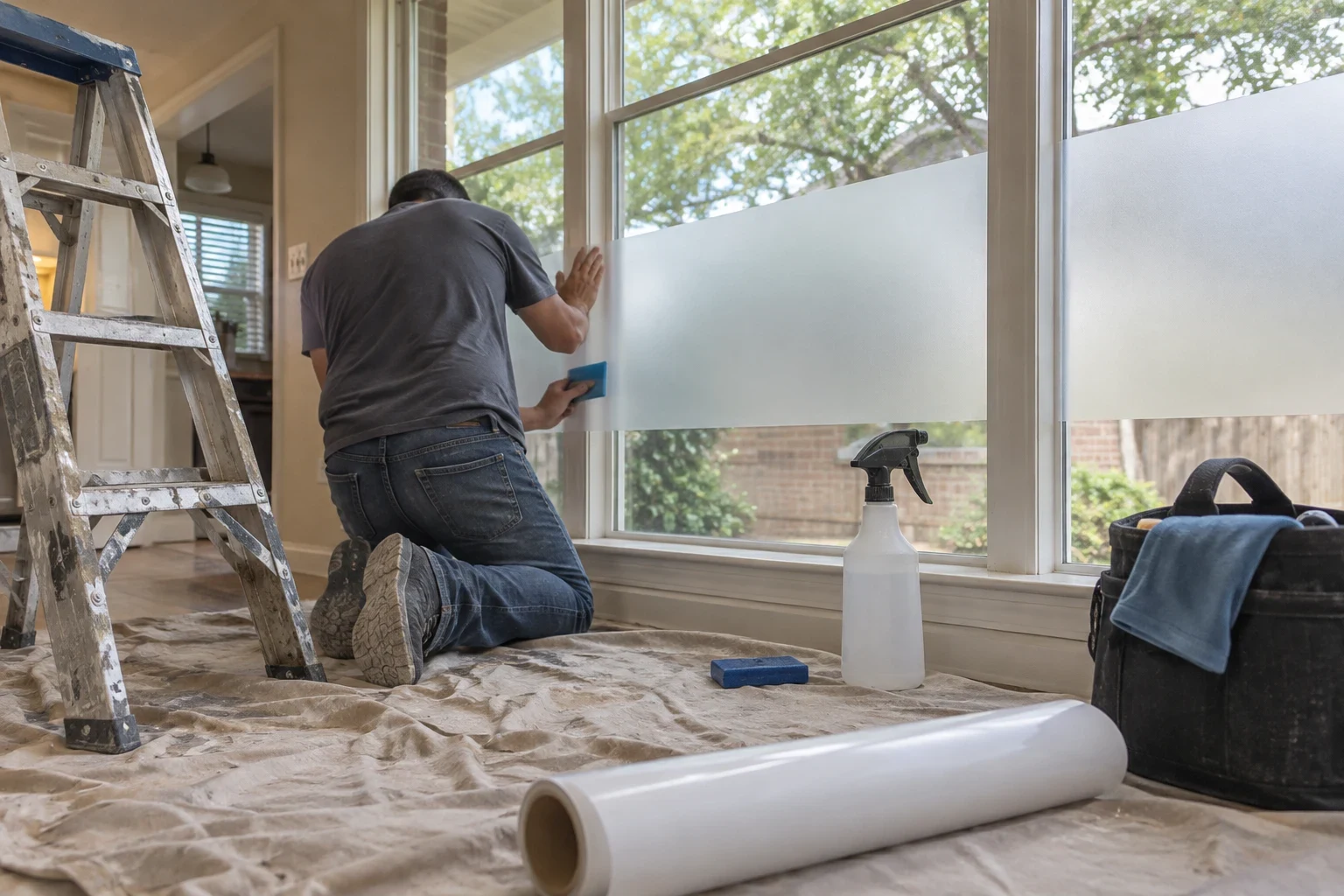
What this film does and when it makes sense
Most newer windows have two panes of glass sealed with gas between them and a low-E coating on one side. On hot days that gas expands and shrinks, and the glass can bow slightly inward. A bowed pane works like a weak magnifying glass. It throws a hot strip of light across the yard that moves as the sun moves. Artificial turf is plastic, and that strip can curl or melt it in a single day.
Turf protection window film goes on the glass that is doing the reflecting. It cuts down and scatters the reflected light so the beam loses its focus. From inside, the window still looks like a window and you still see out.
The job isn't done when the film is on. We check back once it has cured and the sun has crossed the yard at a few different angles. We look at the turf, confirm the hot spot is gone and show you how to clean the film without damaging it.
What the work includes
Tracing the source window
The burn mark is not always caused by the closest window. We follow the melt line back to the glass using the time of day and the angle of the sun. Sometimes two windows are working together.
Film chosen for the glass
Double-pane and low-E glass have limits on what film should go on them. We pick a film made to cut reflection without trapping extra heat against the seal.
Clean prep and install
We wash the glass, clear old residue from the edges, lay the film, squeegee out the water and trim it tight to the frame. Drop cloths go down wherever we work.
A check-back visit
Once the film cures we return to look for lifted edges or trapped bubbles and to see how the turf is holding up in the late-day sun.
Plain care instructions
You get simple directions: how long to wait before cleaning, what to clean with, and what to keep off the film. We also tell you which early haze is normal and which is worth a call.
Signs a window is damaging your yard
- A melted line in the turf
- Look for a narrow strip of shiny, flattened or curled blades, often slightly curved. It tends to come back in the same spot even when you patch it.
- Wavy siding or fence panels
- Vinyl siding that ripples or sags, often on the side that faces a neighbor's windows, is a common sign of concentrated reflection.
- A patch too hot to touch
- If one spot on the turf is much hotter than the rest on a sunny day, or your dog steers around it, a window is likely aiming light there.
- Trouble that started with new windows
- Damage that began the same season you or a neighbor put in energy-efficient double panes points straight at the new glass.
- It shows up in certain months
- The beam moves with the sun's height, so damage may come and go with the seasons. Around Seabrook the long sunny stretch gives that beam plenty of days to do harm.
How the job goes
- 1
Free consultation by phone
Tell us what you are seeing and where. We ask about the windows, the turf and which way the yard faces, then set a time to come look.
- 2
Look at the yard and the glass
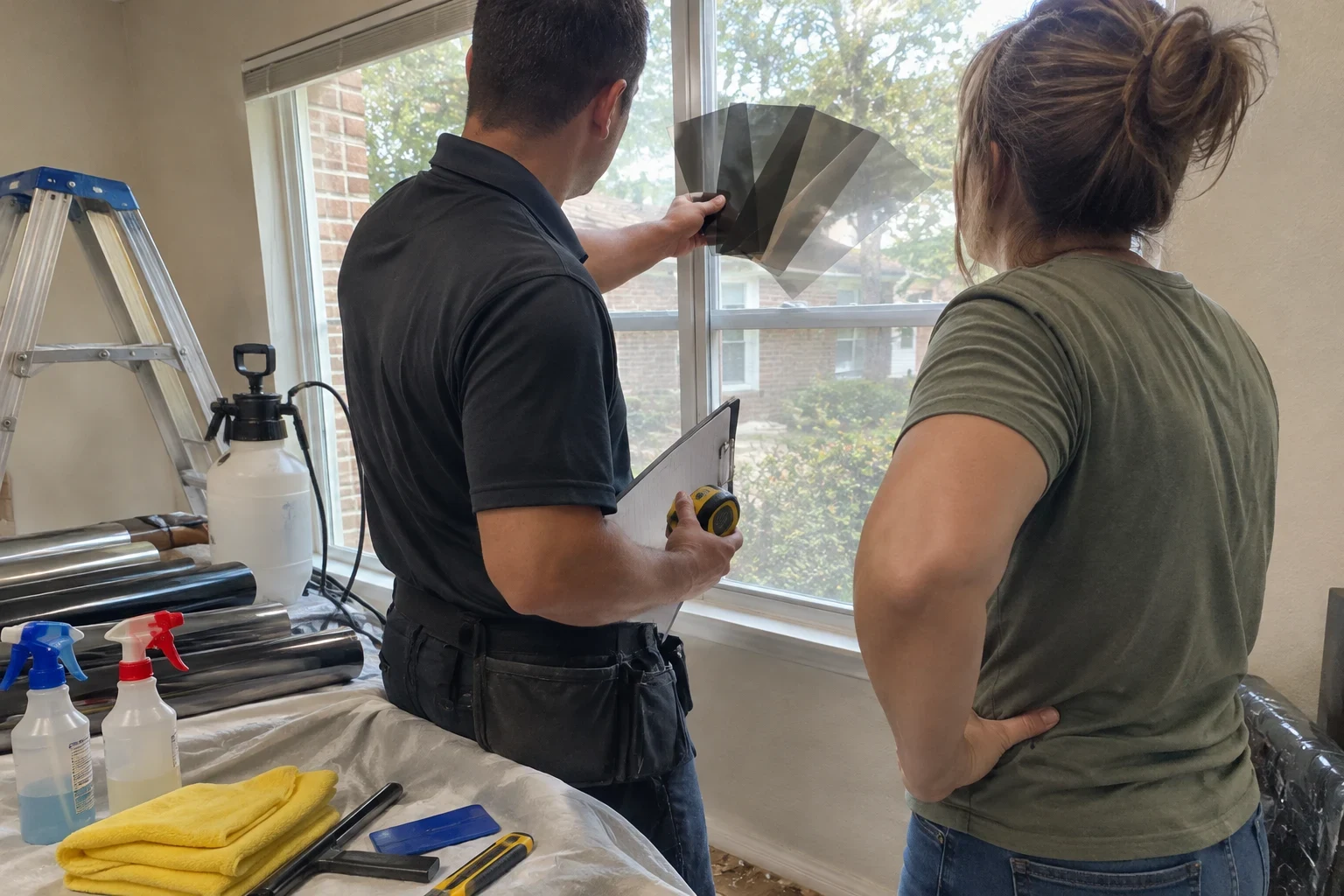
We trace the damage to its source, check the windows for failed seals and measure each pane. You get a written quote that lists every window and the film for each one.
- 3
Install day
Most turf jobs take a few hours. The film may look a little hazy or show small water pockets at first. That is normal while it cures and it clears on its own.
- 4
We check back
A few weeks later we follow up to look at the edges and the turf, and we answer any questions about cleaning or care.
What moves the price
The biggest factor is how many windows are causing the damage and how big they are. We put the number in writing before any work starts, so there is nothing added later. Every yard lines up with the sun differently, so we quote once we see it.
- Number and size of panes
- One patio door costs less than a row of tall windows. We only film the glass that is actually aiming light at the damage.
- Reaching the glass
- Second-story windows, steep slopes or thick landscaping take more time and gear to work around safely.
- Glass condition
- Old film that has to be stripped, or a seal that is already failing, adds work. We tell you about a bad seal before we put anything on that pane.
- Whose window it is
- If the window is on a neighbor's house, we need their permission and a time that works for them. That can mean an extra visit.
Questions about turf protection film
- The window melting my turf is on my neighbor's house. Can you still help?
- Yes, but only with the owner's permission. Many neighbors are glad to fix it once they see the damage. We can explain to both of you what the film does and how it will look from their side.
- Can't I just replace the damaged turf?
- You can, but new turf will melt in the same spot if the reflection is still there. Fixing the glass first protects the money you spend on the yard.
- Will the film make my window darker?
- Most turf films change the look of the glass a little. We bring samples so you can hold them up to your window and see the difference before you decide.
- How do I clean the film once it's on?
- Wait until it has cured, which we will time for you on install day. From then on, use a soft cloth or rubber squeegee with mild soapy water. Skip ammonia cleaners, razor blades and scrub pads, since they can scratch or cloud the film.
- Will film affect my window manufacturer's warranty?
- Some window makers have rules about film on their glass. Pull out your window paperwork if you have it, and we will go over it with you before choosing a film.
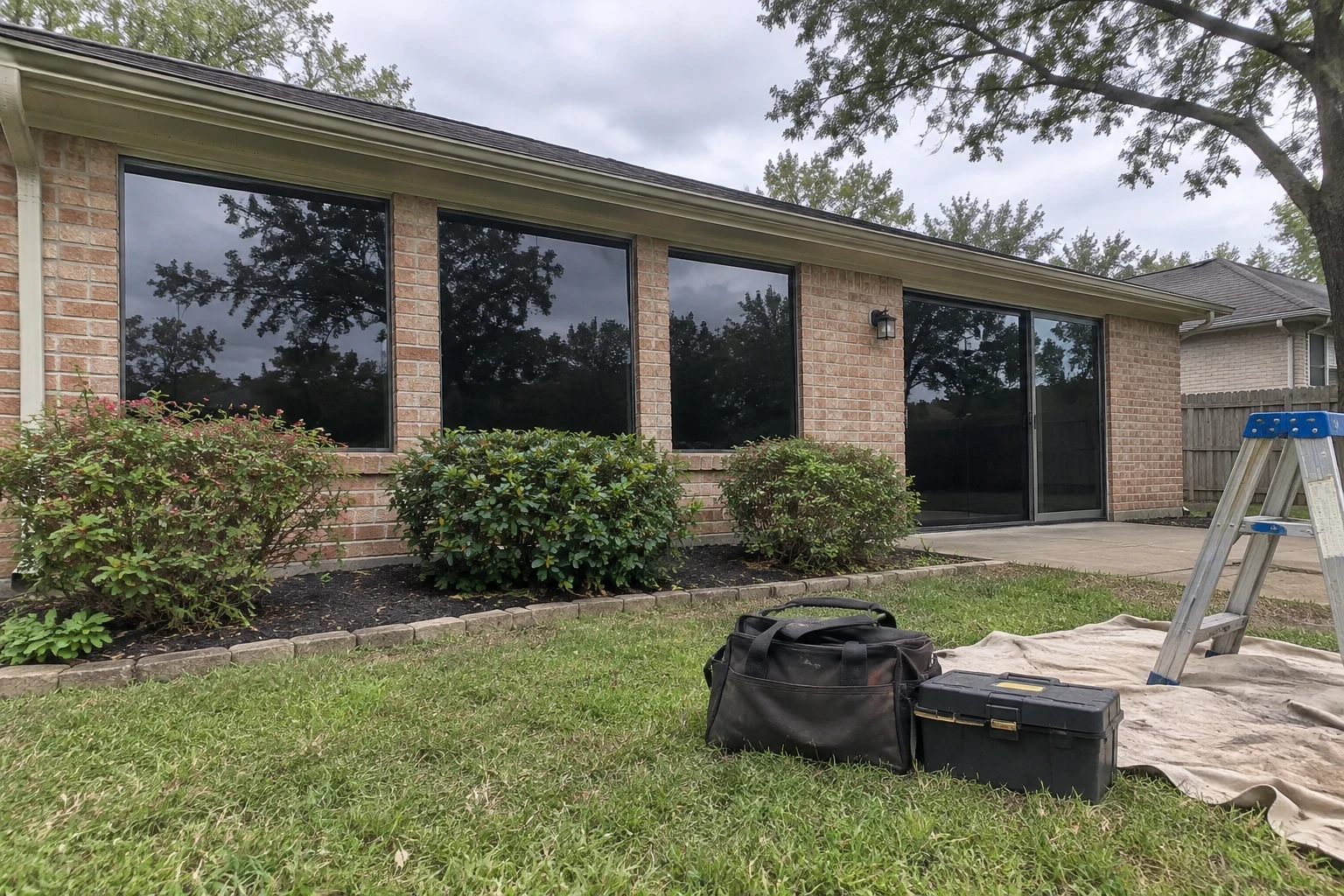
Get the hot spot off your lawn
Tell us where the burn marks are and which windows face them. We will come look, quote it in writing and check back after the install to make sure it worked.