ServicesCommercial Window Tinting
Commercial Window Tinting in Seabrook
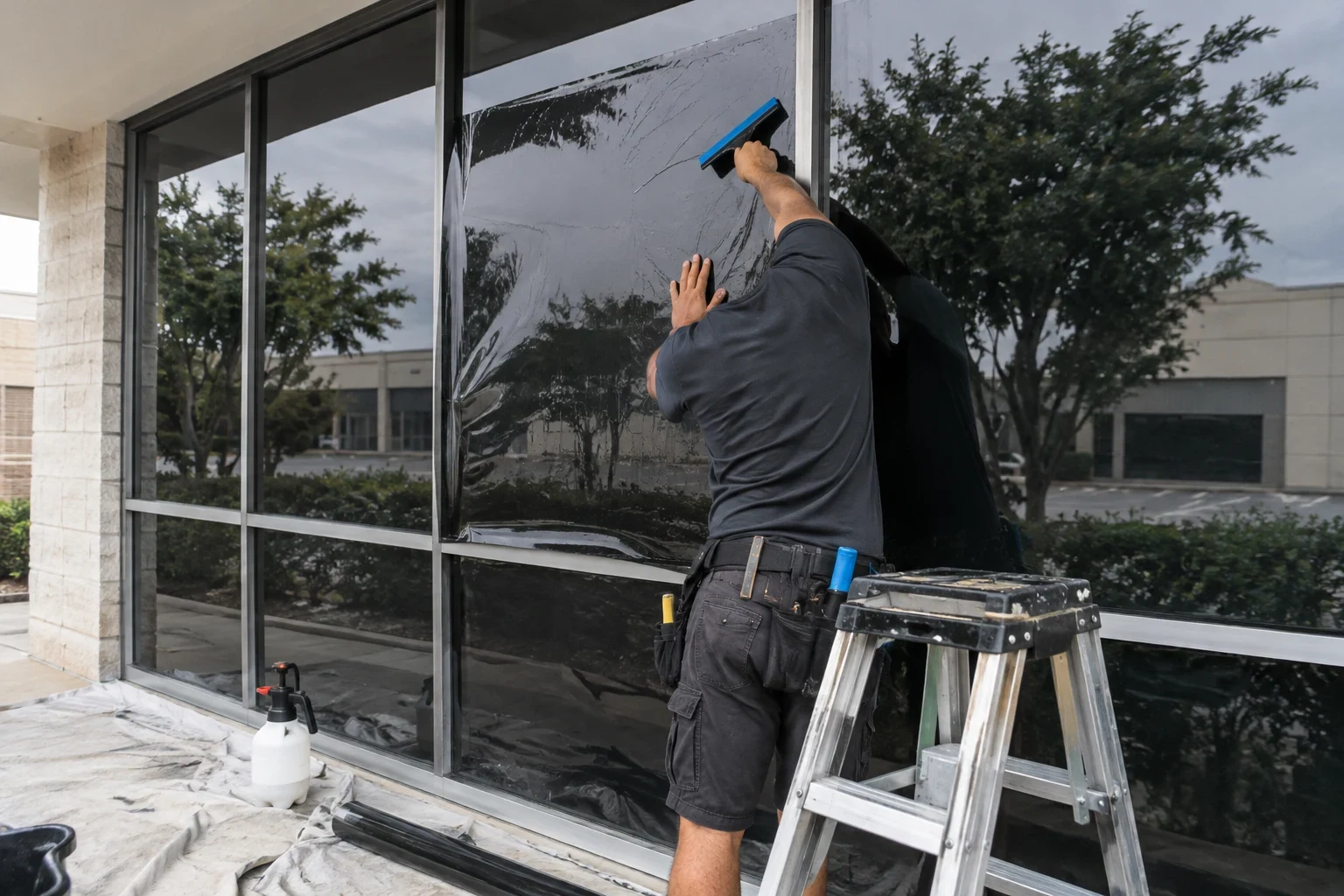
We put window film on storefronts, lobbies and business buildings to cut heat, glare and fading. We measure, explain your film options in plain words and work around your hours. Once the film cures, we come back to check every pane and show your staff how to clean it.
Window Film for the Place You Run Your Business
Big panes of glass let in light, and a lot of heat with it. Customers squint at the register. Staff move desks away from the windows. Product on display fades. The AC runs hard most of the year, and on the Gulf Coast that is a long stretch.
Commercial window tinting puts a thin film on the inside of the glass that blocks most UV and a good share of solar heat. You keep the view and the daylight. Your space gets more even in temperature, and glare drops enough that screens are readable again.
We do not stop at the install. Film takes time to cure, so we check back once it has settled, look over the work with you and leave simple care steps for whoever cleans your glass. If something needs attention, we deal with it then.
What the Job Includes
- Walk-through and glass check
- We look at every window you want covered and note the glass type, its size and which way it faces. Single-pane, dual-pane and tempered glass each take film differently, so this step decides which films are safe to use.
- Film options explained plainly
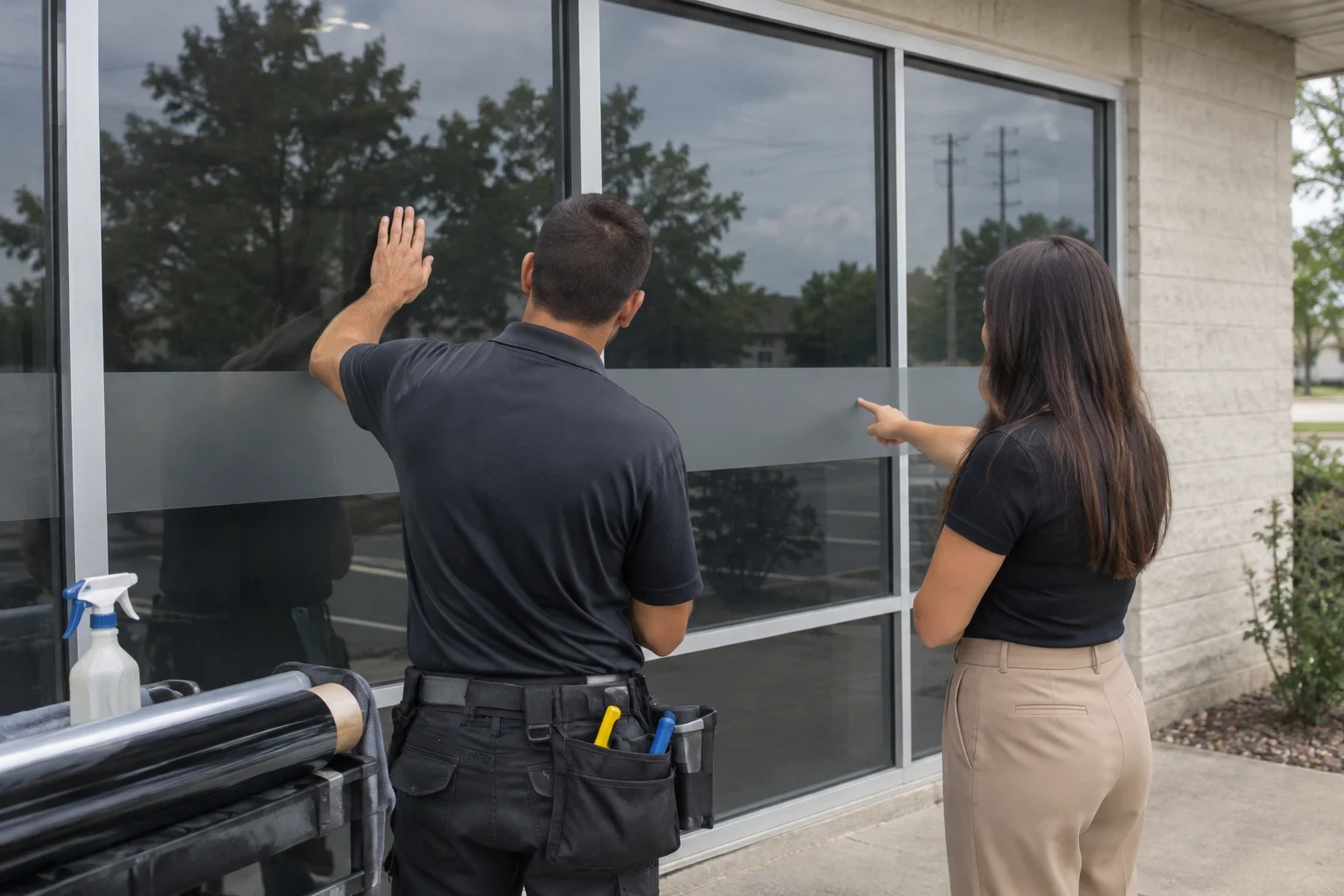
- We show samples side by side and tell you what each does for heat rejection, glare reduction and how it looks from the street. Some businesses want a mirrored look, others want glass that looks untouched. We help you pick based on the problem you have.
- Clean, careful install
- Glass is scrubbed and the edges detailed before film goes on. We cover floors, move what needs moving and keep the work area tight so customers can still come and go.
- Written quote by window
- You get the price broken down by area, so you can do the worst windows now and the rest later if that fits your budget.
- Follow-up visit and care guide
- Once the cure period is over, we come back, check for lifted edges or trapped debris and fix anything that is off. Your staff gets a short list of how to clean the film without scratching it.
Signs Your Building Could Use Window Film
Hot spots by the glass
One side of the room is comfortable and the side by the windows is not. Film evens that out so the thermostat stops fighting itself.
Glare on screens and registers
If staff tilt monitors or pull blinds when the sun swings west, the sun is costing you work time. Glare reduction film fixes that without blocking the view.
Faded stock and furniture
Sun-bleached packaging, washed-out carpet and cracked chair upholstery near windows come from UV. Film blocks most of it.
High cooling bills
Sun through west and south glass is a big load on your AC. Cutting that heat at the glass is one of the simpler ways to work toward energy savings.
Blinds that stay closed all day
If you paid for a bright storefront and keep it covered, film lets you open it back up.
What Moves the Price
Every building is different, so we quote once we see the glass. The number comes from a handful of things we can show you on the walk-through. You will know what is driving the cost before you say yes.
Total glass area
More square footage means more film and more labor. Large storefront panes often go faster per foot than lots of small divided windows.
Film type
Ceramic film and high-performance films cost more than basic dyed or reflective film, but they reject more heat without darkening the glass much.
Access and height
Ground-floor glass we can reach from the floor is simpler. Tall lobby windows, transoms or panes behind fixed displays take ladders, lifts or extra setup time.
Old film removal
Peeling or purple old film has to come off first, adhesive and all. That can add real time depending on how badly it has broken down.
How the Work Goes
- 1
Free consultation by phone
We talk through what bothers you about the windows, how many there are and your business hours. Then we set a time to come measure.
- 2
Measure and quote
On site we check the glass, measure every pane and show film samples in your actual light. You get a written quote broken down by window or area.
- 3
Install day
We can schedule early, late or on a slow day so you stay open. We prep the glass, apply the film, trim the edges and clean up before we leave.
- 4
Check back once it cures
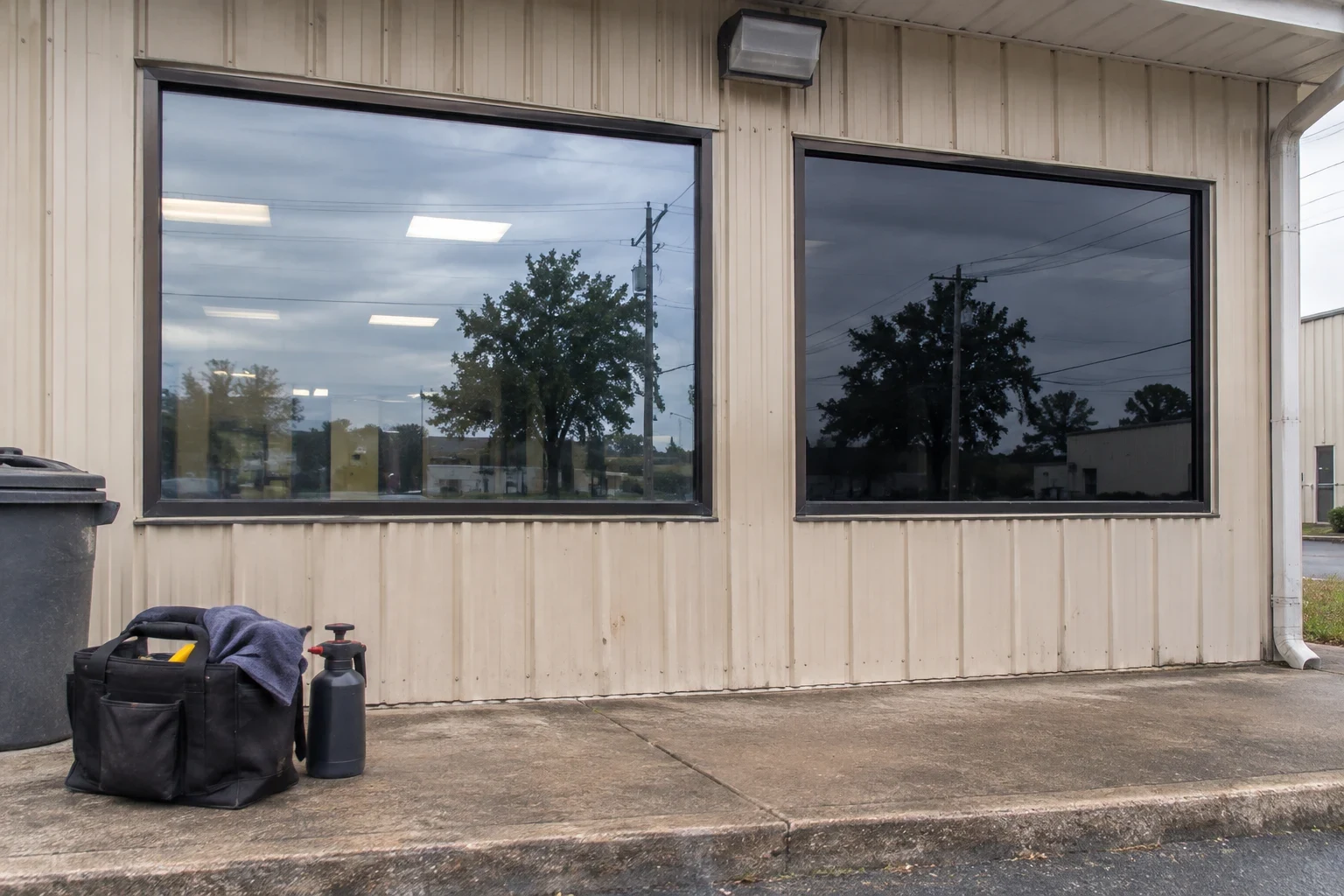
Small water bubbles and a slight haze are normal for the first few weeks while the film dries. When that clears, we return, inspect the work with you and go over care.
Commercial Window Tinting Questions
Do we have to close while you work?
Usually not. We work in sections and keep our area small. If you would rather customers not see it, we can come before opening or once you close for the day.
Can film crack dual-pane windows?
The wrong film on the wrong glass can add heat stress. That is why we check every pane first and only use films suited to that glass type and its sun exposure. If a film is not a good match, we will tell you.
Will people outside still be able to see in?
That depends on the film. Reflective film gives strong daytime privacy, while clear ceramic film keeps your storefront looking open. At night, with lights on inside, most films show into the space, so we talk through that during the consultation.
How do we clean the windows once the film is on?
Wait until we say the film has cured, usually a few weeks. Then use a soft cloth or rubber squeegee with mild soapy water. Skip ammonia cleaners, scrub pads and razor blades on the inside glass. We leave these steps in writing on our follow-up visit.
What if a corner lifts a few months in?
Call us and we will come look. Most lifting comes from cleaning tools catching an edge or a spot that did not bond, and it can usually be fixed or that piece redone.
Let's Look at Your Windows
Tell us which glass gives you the most trouble and when you are open. We will set a time to measure, quote it plainly and come back to check it once the job is done.